
Why Does My Neck Feel Stiff After Sitting All Day?
Your neck may be reacting less to one “bad” position than to spending too long in the same position. Here’s what may be contributing—and what you can do about it.
Your Neck Wants Movement
The short answer
Neck stiffness after desk work often involves a combination of prolonged stillness, workstation position, muscle fatigue, stress, and the way your neck and upper back are sharing the workload. Your symptoms still deserve individual context—especially when they persist, worsen, or involve the arm or hand.
You finish a long day at the computer, turn your head, and discover that your neck has apparently aged forty years since lunch. It feels tight. Looking over one shoulder takes negotiation. Your upper back may feel tired, and you might be tempted to blame your posture for everything.
Posture can matter, but the story is usually more useful than “sit up straight.” The human body is designed to move between positions. Even a tidy-looking posture can become uncomfortable when you hold it for hours.
Why sitting can leave your neck feeling stiff
You have stayed still for too long
Working at a screen often keeps the head, shoulders, and upper back relatively fixed. Muscles that quietly hold you in place can become tired, while joints and tissues may feel less comfortable when you finally move again.
Your screen is making you reach
If the monitor is too low, too high, too far away, or off to one side, your head may drift forward or remain turned. The same thing happens when a laptop becomes both the screen and keyboard for an entire workday.
Your shoulders and upper back are part of the equation
The neck does not work alone. Unsupported arms, a distant mouse, rounded shoulders, or a rigid upper back can change how the area feels. Where you notice the stiffness is not always the only place worth assessing.
Stress may be turning up the volume
Busy days can change breathing, sleep, muscle tension, and how strongly discomfort is experienced. That does not mean the symptoms are imaginary. It means the nervous system, workload, and physical habits may all be contributing.
There is no prize for “perfect posture”
A useful posture supports the task you are doing and allows you to change position easily. The goal is not to hold yourself like a statue. It is to reduce unnecessary strain, keep frequently used items within comfortable reach, and move often enough that one position does not become your entire day.
For a computer workstation, the monitor is generally most comfortable when the top is at or slightly below eye level, the head and neck can remain in line with the torso, and the shoulders can stay relaxed. The keyboard and mouse should be close enough that you are not continually reaching forward.
Five practical changes to try
1. Change position regularly
Use natural breaks—calls, completed tasks, refilling water, or sending a report—as cues to stand, walk briefly, or simply sit differently.
2. Bring the work toward you
Move the monitor, keyboard, mouse, and documents so your body does not have to spend the day reaching toward them.
3. Use a one-minute movement reset
Stand up, let your shoulders relax, gently turn your head within a comfortable range, and take a short walk. Movement should feel easy—not forced.
4. Lift the phone, not your shoulders
Bring handheld screens closer to eye level when practical. Avoid pinning a phone between your ear and shoulder during longer calls.
5. Notice your pattern
Does stiffness build after a particular task? Is it worse on one side? Does moving help? Those details can make an assessment more useful.
And one thing not to do
Do not force a stretch through sharp pain or keep repeating a movement that clearly makes symptoms worse. Comfortable movement is the better starting point.
When an assessment makes sense
Consider having your neck assessed when stiffness keeps returning, lasts longer than expected, limits normal movement, disrupts work or sleep, or is accompanied by symptoms into the shoulder, arm, or hand. An assessment helps distinguish a simple workload problem from something that needs different or additional evaluation.
When to seek medical care promptly
Neck stiffness is common, but some situations should not wait for a routine chiropractic appointment. Seek appropriate medical care when neck pain or stiffness:
- follows a significant accident, fall, or other trauma;
- is severe, rapidly worsening, or unlike anything you have experienced before;
- travels into an arm or leg, especially with numbness, tingling, or weakness;
- comes with fever, a severe headache, loss of balance, or difficulty coordinating movement; or
- causes you serious concern for any other reason.
What we look at during a chiropractic assessment
At The Chiropractor by SLEX, we begin by listening. We ask when the stiffness started, what seems to aggravate or relieve it, how it affects your activities, and what you want to be able to do more comfortably.
Your assessment may include:
- relevant posture and workstation habits;
- neck and upper-back movement;
- range of motion and joint function;
- strength, sensation, or other neurological checks when indicated; and
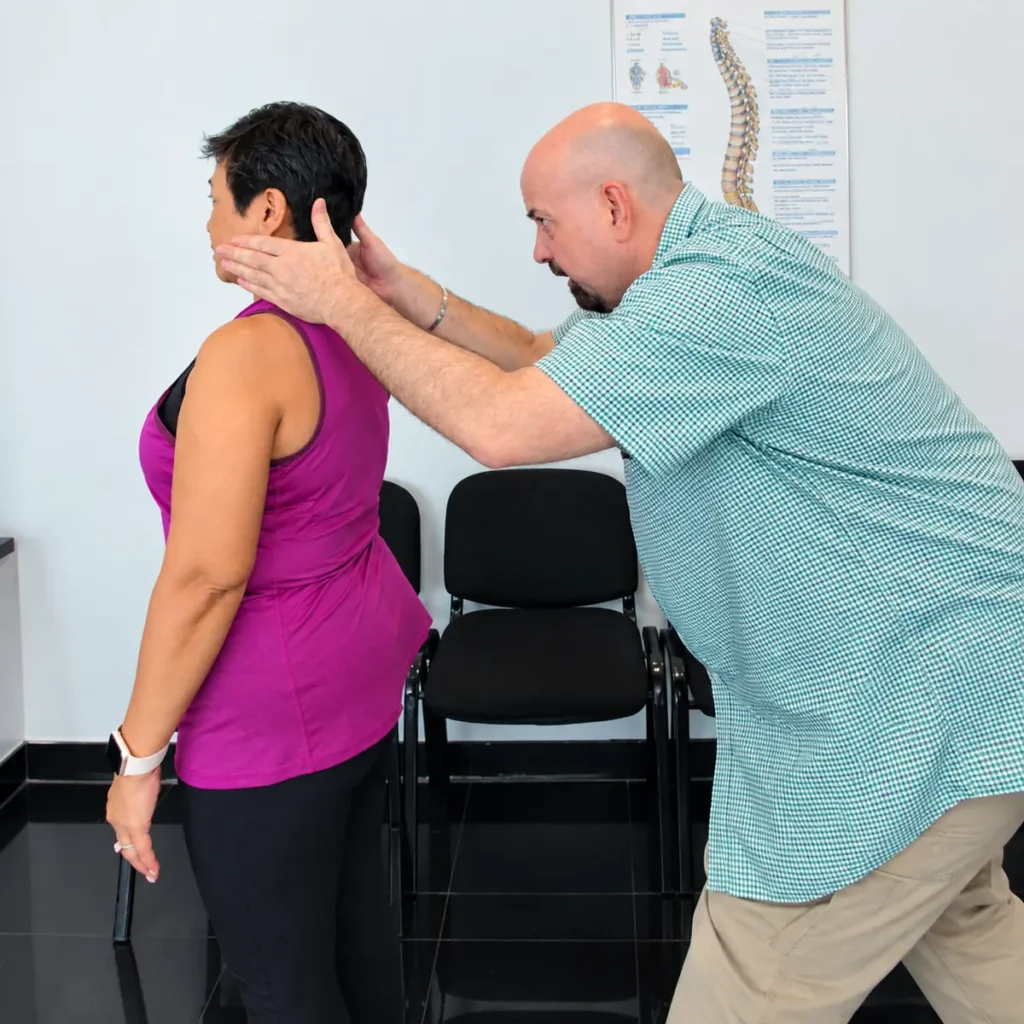
- discussion of whether chiropractic care, another evaluation, or a combination of approaches may be appropriate.
We then explain the findings in plain language. The goal is not to frighten you with an impressive-sounding diagnosis or promise that one adjustment will solve everything. It is to give your symptoms context and help you make an informed decision about what comes next.
Your neck is not asking you to sit perfectly. It is probably asking you to move more often, arrange your work more intelligently, and pay attention when the same problem keeps returning.