
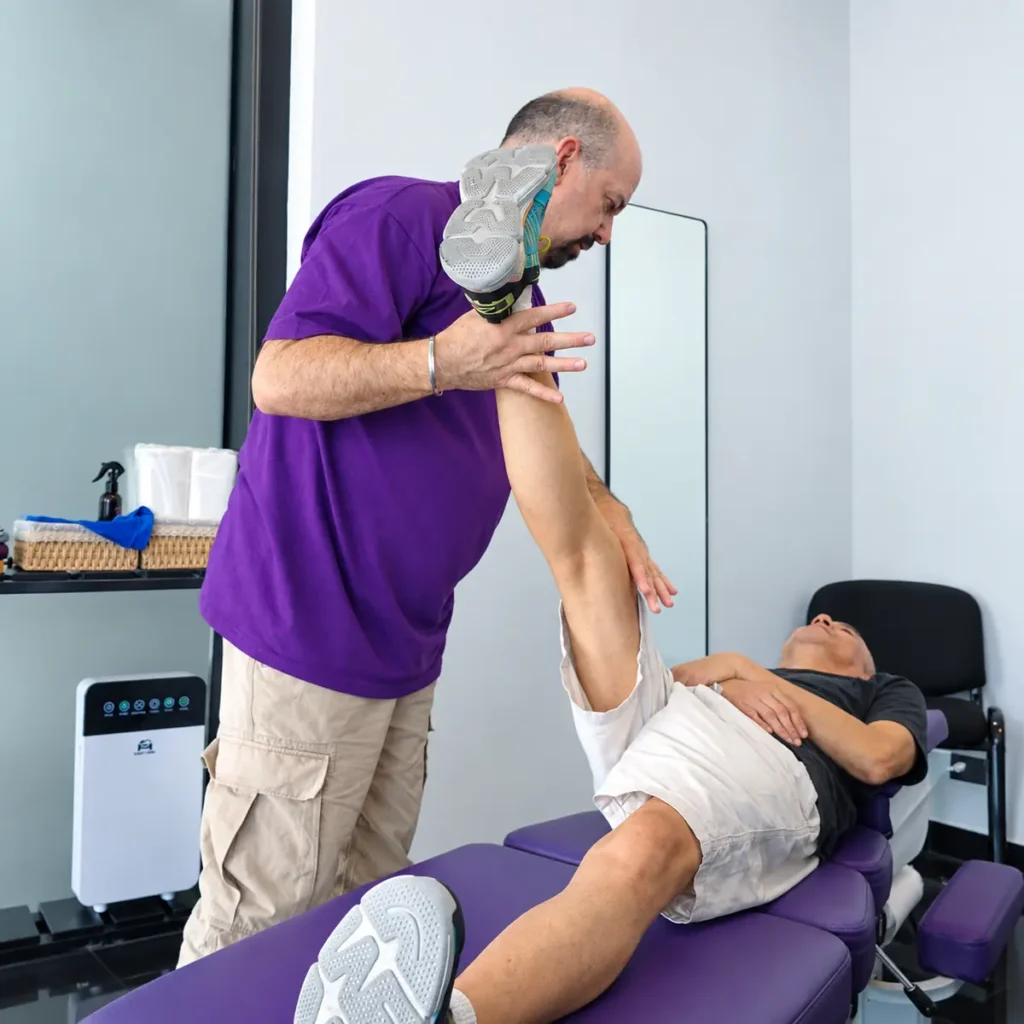
Pain that travels from the lower back or buttock into the leg is often called sciatica. The word is familiar, but it is frequently used for any ache near the hip or thigh—even when the sciatic nerve is not involved.
Sciatica is better understood as a pattern of nerve-related symptoms. It may include leg pain, tingling, numbness, altered sensation, or weakness associated with irritation or compression of a nerve root in the lower spine. Some people also have back pain; others notice that the leg symptoms are more prominent.
Because several conditions can produce similar complaints, treatment should not begin with the assumption that every pain running down a leg is the same problem.
What sciatica can feel like
Symptoms commonly affect one side and may travel through part of the buttock, thigh, calf, or foot. Patients describe the sensation in different ways:
- sharp, burning, electric, or shooting pain;
- tingling or “pins and needles”;
- numbness or altered skin sensation;
- heaviness or weakness in the leg; or
- symptoms aggravated by certain positions, coughing, sneezing, or prolonged sitting.
The exact location does not diagnose the cause by itself. Hip conditions, muscular pain, peripheral nerve problems, vascular problems, and other medical conditions can imitate parts of a sciatic pattern.
What can cause sciatic symptoms?
One common cause is irritation of a spinal nerve root related to a disc herniation. Age-related changes that reduce space around a nerve, such as spinal stenosis, can also contribute. Less common causes include trauma, infection, tumor, inflammatory disease, or other disorders requiring medical care.
An MRI report may identify a disc bulge, but that finding must be interpreted carefully. Disc changes are common in people without symptoms. The important question is whether the history, examination, and imaging—when imaging is actually indicated—fit together.
How sciatica is assessed
An assessment begins with questions about the onset, distribution, and behavior of the symptoms. We also need to know about previous episodes, injuries, illnesses, operations, medications, and changes in bladder or bowel function.
The examination may include:
- lower-back and hip movement;
- strength testing;
- reflexes and sensation;
- nerve-tension or orthopedic tests;
- walking, balance, or functional tasks; and
- examination of nearby areas when appropriate.
Imaging is not automatically required for every episode. Guidelines generally recommend considering imaging when serious disease is suspected, neurological loss is progressive, symptoms persist in a way that could change treatment, or a specialist is considering an intervention for which the result would matter.
Does sciatica always require surgery?
No. Many cases improve with time and appropriate conservative management. Advice commonly includes remaining reasonably active, modifying aggravating activity temporarily, and gradually returning to normal tasks as tolerated.
Surgery may be considered when symptoms remain severe despite appropriate conservative care, when the clinical and imaging findings agree, or when neurological function is threatened. That decision belongs in an informed medical and surgical evaluation—not in a blanket promise from any one profession.
Where chiropractic care may fit
For selected patients, chiropractic care may be one part of a conservative plan. Depending on the assessment, this might include activity guidance, appropriate manual care, movement or exercise recommendations, and monitoring of neurological findings and function.
Major guidelines suggest that manual therapy may be considered for low-back pain with or without sciatica when it is part of a broader approach that includes exercise. It should not be presented as a stand-alone cure or as a method of “putting a slipped disc back in.”
Not every patient with leg symptoms is suitable for manipulation or mechanical decompression. Technique and force should be adapted to the person, and care should be reconsidered when symptoms worsen, spread, or fail to improve meaningfully.
What progress should look like
Pain intensity is important, but it is not the only outcome. Useful signs of improvement may include:
- leg symptoms becoming less intense or less frequent;
- symptoms no longer traveling as far down the leg;
- improved strength, sensation, or movement;
- longer periods of comfortable sitting or walking;
- better sleep; and
- a safer return to work, exercise, or family activities.
Progress should be reviewed. If the patient is not improving as expected, the working explanation and care plan should be reconsidered rather than repeated indefinitely.
When sciatica may be an emergency
Most sciatic episodes are not emergencies. Certain combinations of symptoms, however, may indicate serious pressure on the bundle of nerves at the bottom of the spinal canal, known as cauda equina syndrome.
Seek urgent emergency assessment for symptoms such as:
- new loss of bladder or bowel control;
- difficulty beginning urination or inability to sense bladder fullness;
- numbness around the genitals, anus, or saddle area;
- severe or worsening weakness in one or both legs; or
- rapidly changing symptoms affecting both legs.
Prompt medical evaluation is also important after significant trauma or when leg symptoms occur with fever, unexplained weight loss, a history of cancer, serious infection risk, or feeling systemically unwell.
Do not wait for a routine chiropractic appointment when these warning signs are present.
Practical steps while arranging appropriate care
Unless a clinician has advised otherwise, complete bed rest is generally not the goal. Gentle movement and ordinary activity within a tolerable range may be preferable to remaining still for days. Change positions periodically, avoid repeatedly forcing movements that clearly worsen leg symptoms, and note any changes in strength or sensation.
Medication questions should be discussed with an appropriate medical professional or pharmacist, particularly when other conditions, pregnancy, allergies, or existing prescriptions are involved.
The takeaway
Sciatica describes a nerve-related symptom pattern, not one universal diagnosis. The same word may reflect different causes, levels of severity, and appropriate next steps.
A careful assessment should determine whether conservative care is reasonable, whether chiropractic care may play a limited role, or whether medical imaging, another provider, or urgent evaluation is more appropriate. The goal is not to claim every leg pain as a chiropractic case. The goal is to help the patient reach the right care.
Start with the pattern, not the label
If pain, tingling, or numbness is traveling into your leg and no emergency warning signs are present, an initial assessment can help clarify the pattern and discuss appropriate options.
General information only: This article is educational and is not a diagnosis or a substitute for care from a qualified health professional who has assessed you personally.